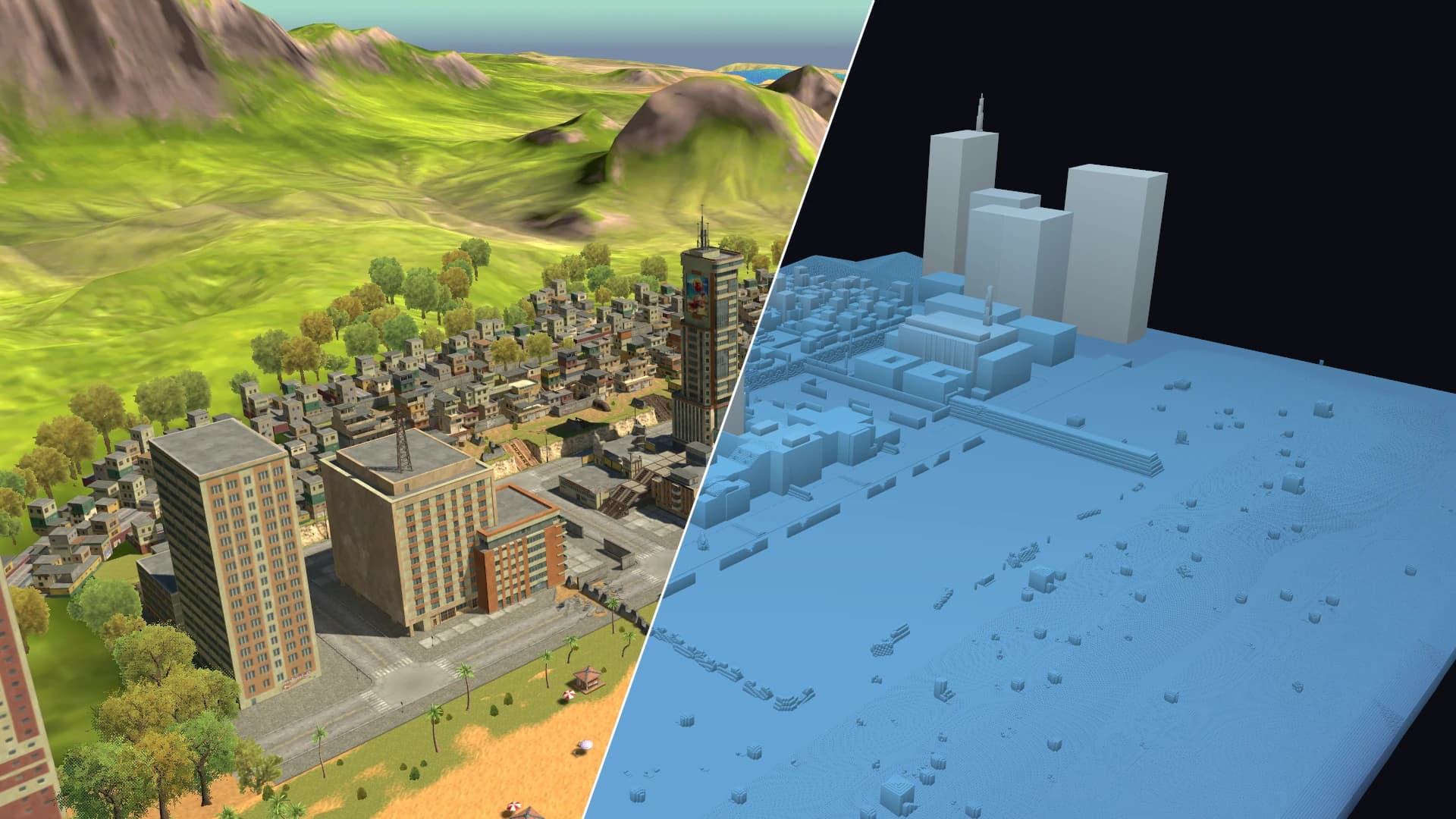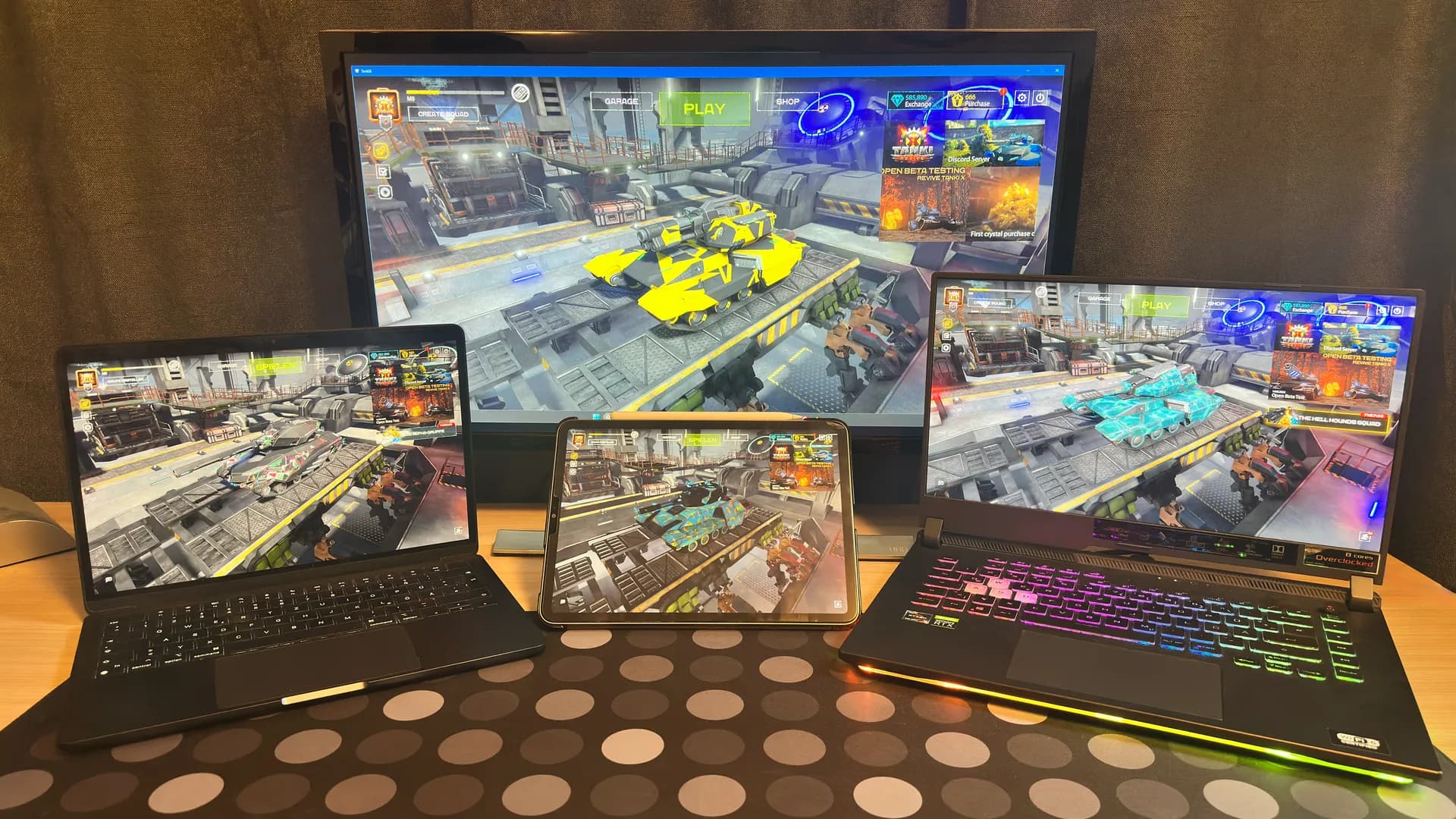
Revive Tanki keeps a game alive whose developers shut it down in 2020. For years that meant running a custom server for a client nobody could change: the original was built with Unity 5.6 in 2017, and all that existed of it was what had been shipped to players. This month the whole client moved to Unity 6. It now runs natively on Windows, Linux and macOS, and as an experiment even on an iPad.

The starting point
There was no project to open. There was a compiled game, about 1,650 asset bundles and a half-working reconstruction that reached the garage on a good day. Before any upgrade could happen, that reconstruction had to become a project that builds the same game: every bundle rebuilt from project files and compared against the original, object by object.
A few things that turned out to be harder than expected:
- Shaders. The original shader sources were gone. What the client ships are compiled Direct3D programs, so the shaders were reconstructed from those and then checked against the originals in play mode, side by side.
- Lighting. Lightmaps, light probes and the settings of every map scene had to be recovered from the bundles and put back in a form the editor accepts.
- Identity. Thousands of assets reference each other by ID. The rebuilt project carries the IDs of the original client, so that a server which still speaks the old protocol finds everything where it expects it.
The rule for all of it was simple and strict: nothing a player can see may change. Whenever the new build and the original disagreed, the original was right.
Ten engine versions in two days
With a project that reproduced the original, the upgrade itself was a walk through Unity's history: 5.6, 2017, 2018, 2019, 2020, 2021, 2022, Unity 6 and finally the current 6000.6. Each step in its own working copy, each one only accepted once the code compiled, all bundles built and the player reached the home screen.
Most steps were quiet. The interesting ones were where the engine had changed its mind about something the game relied on. Unity 5.6 enabled a hierarchy of objects from the root down, the current version does it the other way round, and a UI built in 2017 notices. Text rendering moved to a package with a different vertex layout. Old shaders had to learn OpenGL, Vulkan and Metal, which they had never been asked to speak.
What it bought
- Linux and macOS. Native builds, the macOS one as a single application for Intel and Apple processors.
- 64 bit on Windows.
- A release pipeline. One script builds the bundles and the player for all three platforms, packs the update packages, the Windows installer and the macOS disk image, and uploads them next to the live version without touching it.
- An iPad. Not a product, just a question: how far does this go now? Far enough to start, log in and join a battle.

The bug that came along
A day after release, players reported crashes, never twice in the same place. Memory dumps finally showed why: the game emits its track dust with a call that Unity has marked as obsolete for years. In Unity 5.6 it stopped at a particle system's limit. In the current version it keeps going and writes past the end of the arrays, damaging whatever happens to lie behind them. The fix was a handful of lines.

That crash was the worst of it, but far from the only thing. The release shook loose dozens of bugs, from broken HUD elements to maps with the wrong lighting. For two days straight I did little else than read bug reports and ship fixes, and the community carried a big part of it: players sent logs and crash dumps, installed one test build after another and reported back within minutes, some of them late into the night. Most of those bugs were gone after those two days, and without that help it would have taken weeks.
What I take from it
Upgrading an engine across nine years is less about the engine than about knowing exactly what you had before. The days spent on making the project reproduce the original paid for themselves at every later step, because there was always something to compare against. And the worst bug of the whole move was not in anything new, but in one line that had worked unchanged since 2017.
The game is available on the project's website.